Websites Archives » Rivmedia Web Design http://rivmediawebdesign.com.au/tag/websites/ Coaching websites & website marketing Tue, 31 Jan 2023 00:32:03 +0000 en-US hourly 1 https://wordpress.org/?v=6.1.1 http://rivmediawebdesign.com.au/wp-content/uploads/2020/09/favicon-600x600.png Websites Archives » Rivmedia Web Design http://rivmediawebdesign.com.au/tag/websites/ 32 32 How To Market Your Coaching Business: 9 Effective Strategies http://rivmediawebdesign.com.au/how-to-market-your-coaching-business-9-effective-strategies/ http://rivmediawebdesign.com.au/how-to-market-your-coaching-business-9-effective-strategies/#respond Tue, 23 Aug 2022 02:10:06 +0000 http://rivmediawebdesign.com.au/?p=97831 Explore 9 strategies to effectively market your coaching business. Plus, actionable tips to help you improve your marketing efforts & attract more leads

The post How To Market Your Coaching Business: 9 Effective Strategies appeared first on Rivmedia Web Design.

]]>

This is a guest post that was written by me (Libby Hogan) for Coach Vantage.

How To Market Your Coaching Business: 9 Effective Strategies

We all know that even if you’re an amazing coach or consultant, you need a solid marketing strategy to be able to attract clients and run a successful coaching business.

The kicker though is knowing what to do and how to do it right. And unless you’re a marketing expert, this can be an understandable challenge for many.

The good news is there is an abundance of different ways to market your coaching business. And do so not only within a budget that works for you but also with what’s in line with your strengths, and the target audience you wish to reach.

Meet Libby

Hi, my name is Libby and I’m a web designer, marketing strategist and coach in training. I specialise in helping coaches, like you, to build the business you really want, and live the life you dream about.

In this article, I explore 9 popular marketing strategies that you can use for your coaching business. As well as provide handy, actionable tips to improve your marketing efforts so you can attract more leads.

Article Contents:

Marketing Strategies: Common Misconceptions
Choosing which strategies are best for your business to reach more potential clients
Before you launch any marketing activities, know who your ideal clients are!

Marketing Strategies:
  1. Instagram, Facebook Pages & Facebook Groups
  2. Start your own blog and guest blogging
  3. List Your Business on Directory Websites
  4. Create a Strategy-Driven Website
  5. Speaking Gigs
  6. Be a Podcast host or guest
  7. Networking groups
  8. Email Marketing
  9. Paid advertising

Final thoughts: How to market your coaching business effectively

Marketing Strategies: Common misconceptions

First, let’s dispel some myths to get in the right mindset. In my time speaking with other coaches, a lot of misconceptions would often come up about marketing strategies for their business:

  • They associate marketing with having to be “salesy” or even “sleazy“.
  • The best way to get extra clients is through paid advertising.
  • You absolutely have to multiple social accounts and do Reels, Facebook lives, YouTube videos and [insert every other medium that is every introvert’s worst nightmare here]. ?
  • You should be posting on all the different social media platforms, multiple times a day, every day.
  • Your marketing efforts should include: [whatever Insta’s latest marketing guru is flogging here].

Gah, no wonder so many get turned off by marketing. More good news though, none of this is true. So, as the old adage goes, ‘stop shouding yourself to death!’

Sure, there are foundations that are consistent in the marketing industry but there are no hard and fast rules. Even if you’re in the same industry and have the same niche as another business, what works and doesn’t work for them, won’t be the same for you.

What makes you unique and special, is also what makes your business special.

So, give yourself permission to take a breath, and not put any unnecessary pressure on yourself.

Choosing which strategies are best for your business to reach more potential clients

With numerous options to choose from to market your coaching business and every guru, each saying theirs is a “must-have“, finding what’s right can be difficult. My advice – ignore all the noise and shiny objects, and answer the following 3 simple questions:

  1. What’s in line with your strengths: Seriously, if you suck at making videos but are great at content marketing, give priority to your content marketing! You’ll be able to do it well and more importantly, be more motivated to be consistent with it… and consistency is the key.
  2. What will resonate with your target audience: There’s no point posting on Twitter for example if none of your ideal clients hang out on that particular social media platform. Plus, you don’t just want to reach any and all clients, you need to connect with your ideal clients.
  3. What works with your budget: While we don’t always want to admit it, budget is often a factor, especially if you are a new business. There’s no need to break the bank though when so many effective, free marketing strategies are available. Find what is comfortable for where your business is now. You can always re-evaluate investing in new marketing strategies down the road.

Before you launch any marketing activities, know who your ideal clients are!

I can’t stress enough how important it is to have complete clarity on who your ideal client is. Without this knowledge, you won’t know what they really need, let alone how to create compelling content that resonates with them.

Before you can market anything effectively, you need to understand your ideal customer completely. Then, integrate this knowledge across your entire coaching business and marketing strategies.

If you haven’t defined your ideal customers yet, or if you’re messaging isn’t quite landing, I’ve already written another article about this which will help. In it, we explore the importance of defining your ideal customers so you can confidently create marketing strategies that work.

Check it out here ? Successful marketing: It starts with your ideal customer

Now, let’s dive into the different ways you can market your coaching business. And remember, you don’t have to use ALL of these. Hone in on the ones that are best for your business.

Marketing Strategy #1. Instagram, Facebook Pages & Facebook Groups

Having an appealing social media profile legitimises your business and is an effective way to attract followers and reach new potential clients. With best practices in place, the multitude of free options is almost always sufficient for many coaches.

If you want to reach even more clients though, paid ads are a cost-effective option. (discussed further below)

Plus, you can be found in multiple ways. Such as through keyword searches, hashtags and even by scrolling through other social media accounts to see who they are following.

Joining Facebook groups is also an easy way to increase brand awareness and start building your network. Like guest posting, this is an easy way to leverage someone else’s larger, more established audience.

Social Media Pro Tips:

  • Optimise your profile on all social accounts with a great headshot and make it clear what you do and what your niche is.
  • Take the time to create relevant content your current and potential coaching clients will gain value from.
  • Social media is a social network, so get in and participate. Don’t expect people to engage with your business if you don’t return the favour. It’s a great opportunity to get the conversations rolling and start building strong relationships with your potential customers.
  • Leverage the power of social media apps and scheduling tools to make posting consistently easier. My personal favourites are Later and the Meta Business Suite Planner.
  • Facebook Groups: As above, it’s important to engage with Facebook group members as much as possible in order for them to take you seriously and view you as an authority figure in your industry.

Marketing Strategy #2. Start your own blog and guest blogging

Blogging is an effective form of content marketing to attract new clients. It gives you a consistent platform to share your ideas, build your reputation as an expert in your field, and establish yourself as an authority in your industry.

Furthermore, each new blog post can help potential clients understand what services you offer, how much value you can give your customers, what kind of results they can expect and all that before they even opened their wallets.

If your own blog readership is low, guest posting is another option that ticks a lot of boxes:
  • Contributing an article to a more established site allows you to reach a larger audience and build your credibility and authority.
  • You get a link back to your own website which is beneficial for SEO.
  • The blog post will continue to drive organic traffic to your website for as long as it remains published.
  • In return, the host website gets valuable content to serve their own audience, as well as drive more traffic to their own website, and all with minimal effort on their part. It’s a fantastic win-win situation.

Marketing Strategy #3. List Your Business on Directory Websites

Listing your coaching business with online directories is quick, affordable and an effective way to target specific online consumers.

Directory websites have a number of benefits in helping you to to reach more coaching clients, such as:

  • They allow you to gain an instant online presence, particularly helpful if you don’t have a website yet.
  • It can give your own website an SEO boost.
  • Niche directories help to build your credibility and provide social proof (for example by including client reviews or through guest posting).
  • Pricing varies but most offer plans where you should only need to gain 1-2 new clients per year to get a return on your investment on top of what you the benefits mentioned above. So, the cost-benefit is incredibly good.

Directory Website Pro Tips:

Like all of your marketing activities, directory listings are not a magic wand. You have to do your part also in optimising them:

  • Make sure you have appealing content that is SEO optimised.
  • Ensure you have a strategy in place to make it easy for potential clients to take the next step with you, such as offering a free consultation or free coaching, getting them into your sales funnel, or something as simple as just getting them to visit your website.
  • Always keep track of all your directory listings and ensure your business’s content is always up to date, relevant and fresh.
  • As long as the websites are reputable, don’t be afraid to list in multiple directories, the more online awareness you have the better.
  • Listing on directory websites specifically for coaches is a no-brainer in terms of not just expanding your reach, but in gaining higher quality, targeted leads for your business.

Shameless plug – my website Coach Connect Australia is specifically for coaches and consultants within Australia and has over a dozen categories to niche down even further.

Marketing Strategy #4. Create a Strategy-Driven Website

A website allows you to showcase your knowledge, credentials, experience, services and success stories, making it an effective means of establishing the credibility of your coaching business and authority in your industry.

Having a website isn’t enough on its own though, in addition to being visually appealing and functional, a conversion-focused strategy is a must-have for successfully converting visitors into clients.

Website Pro Tips:

  • Make it easy to use and navigate.
  • Make sure it loads as quickly as possible, everything works and no broken links.
  • Avoid unnecessary bells & whistles, they just distract from the important stuff!
  • Mobile responsiveness is a MUST.
  • Have a robust, value-based content marketing plan for each primary page of your site.
  • Include social proof (testimonials, reviews etc.).
  • Include CTA’s (Call To Action) to create more touchpoints and to start building know, like and trust.
  • Utilise the power of lead magnets: Create a free offer (checklist, guide, etc.) that gives your potential client lots of value and an easy quick win. Make sure it’s integrated with your email list so you can build the relationship from there.
  • Be searchable. SEO (Search Engine Optimisation) is an ongoing effort for every online coaching business. For example, research and implement relevant keywords into your content and inbound marketing efforts, include alt tags in all your images, gain reputable backlinks and so on.

Marketing Strategy #5. Speaking Gigs

Similar to joining a relevant Facebook group, speaking gigs are a great way to introduce yourself to your host’s audience. They allow you to increase brand awareness, build connections and networks, and possibly even gain media attention.

Plus, once you have provided value and gained credibility, it’s a great platform to promote your services. Such as a free workshop, your coaching programs, or offering a free session.

Speaking Gig Pro Tips:

  • Focus on providing massive value first, before talking about any of your coaching services. Serve first, sell second.
  • As always, align yourself with an event that has the same target audience as you
  • Know upfront what other business owners will also be speaking about so you can make sure your content is differentiated from there’s

Marketing Strategy #6. Be a Podcast host or guest

With our on-the-go lifestyles, the popularity of podcasting has grown exponentially over the last few years.

For a coaching business specifically, the platform allows you to connect with customers on a much deeper level as the listener can hear the passion in your voice and the emotion behind your words.

If that’s not your forte, having your own podcast is not a must. Instead, you could consider appearing as a guest on someone else’s and still reach a large audience and provide massive value from there.

guest podcasting Pro Tips:

  • Before you even approach a podcaster, be sure to listen to at least 2-3 podcasts to get a good sense of their content and so you’re well prepared to participate.
  • Only approach channels that have the same target audiences as you.
  • Have a look through their reviews so you can get a good idea of what the listeners like (and don’t like) about the show.
  • Get your tech sorted. Nothing worse than low-quality audio!

Marketing Strategy #7. Networking groups

Networking is another great way to gain more exposure, especially to your local area for in-person events.

You can try your local BNI chapter, local business chambers, or other business groups. Or, you can try social media groups to find other online communities.

Networking groups Pro Tips:

  • Have a goal. What do you actually want to achieve by going? Don’t just go to these events because you have been told that you should. Set a purpose, so you remain focused on it, rather than just aimlessly wandering around.
  • Have a solid elevator pitch prepared and ready before you go.
  • Whilst many predominantly run an online coaching business, business cards are still handy for in-person events and make it easy to remember your name, website etc.
  • Dress the part – you want to be comfortable but also give a good impression.
  • Use your coaching skills! Listen and ask good questions.

Marketing Strategy #8. Email Marketing

Email is one of the most effective ways to reach out to potential clients and stay in touch with existing ones. It provides a great way for you to share content with your audience, build relationships, and promote your services to new and past clients alike.

Plus, it’s relatively easy to set up and manage as long as you invest in a reputable email management system, for example, MailChimp, Aweber or Klaviyo.

Email marketing Pro Tips:

  • Create an opt-in list that allows people who visit your website to sign up for news about upcoming events or webinars. This gives them an opportunity to learn more about what you have going on without being pushy or spammy
  • Send emails that contain valuable information that might interest readers who aren’t necessarily looking for coaching specifically but might still benefit by learning something new. This is a great way to build trust.
  • Personalised emails (i.e. where you use their name within the content or subject line) have better opening and click rates. As do interactive emails, (e.g. including a video)
  • Be realistic. Our inboxes are overflowing so don’t be discouraged if not everyone reads all of your newsletters. For example, according to 2022 statistics from Oberlo, the average open rate for a welcome email is only eight percent.

Marketing Strategy #9. Paid advertising

Paid ads are one of the most effective ways to gain more clients for your business and build your brand. Plus, you can decide upfront exactly how much you want to spend and you can refine the targeting options to very specific audiences.

So, if you’ve got a budget for it, here are some great places to start:

Google Adwords

We all know it and we all use Google. So it just makes sense that boosting your business on there has a strong chance of giving you a solid ROI.

There are multiple ad options to choose from including text, image, videos etc. plus multiple budget choices such as impressions versus clicks. Between that and what can be a very complicated-looking dashboard, this can be overwhelming for some.

So, if you do want to utilise this service, my advice is to first get yourself familiar with the foundations and basic terms. Then, set a small budget to begin with and use that as a low-risk, learning opportunity before diving in further.

If you’re new to Google AdWords, Neil Patel offers a great overview and step-by-step guide to help you get started. And, Google itself offers a very handy checklist to follow here.

Facebook

This social media giant is the largest so there’s already a lot of noise out there and it’s true, reach is getting harder and harder.

It is still a good option though in that it can work with any budget, targeting options can be as specific as you need, and the insights make it easy to refine and optimise your campaigns.

Instagram

With over 2 billion monthly active users Instagram is another great option to promote your business. Like Facebook, budget choices, targeting options and insights are very good.

For example, say you’re a health coach that works with Australian mums over 40 who want to lose weight. You can create a social media campaign that targets that specific demographic, and within a budget you choose.

You Tube

Did you know that YouTube is the second largest search engine?! As such it’s getting a tonne of traffic and it’s not all funny cat videos and such. A lot of users come to YouTube for a variety of purposes such as education, inspiration, and motivation… which is right up your alley!

Interested? Check out this video: YouTube Marketing in 2022: A Complete Beginner’s Guide

LinkedIn

Being a work-centric space, this is a haven of quality clients for business coaches and the like. It can be expensive, but if this is where the ideal customers for your niche are, then it should be a worthwhile investment.

Final thoughts: How to market your coaching business effectively

I hope this article has given you a good overview of the different ways that you can promote your coaching business effectively and attract more potential clients.

Remember:
  • Each strategy could warrant an individual article on its own (e.g. for each social media platform), so this is really just a taster to give you inspiration, and motivation to get started.
  • As you go through each strategy, think about how it might fit into your overall marketing plan. The idea is not to use all of them (that would be exhausting!), but to hone in on the activities that work best for your business and your ideal clients.
  • I suggest starting with at least 3. Educate yourself on the foundational details and best practices and get in there and just start experimenting.

Finally, don’t be afraid to delegate! There are experts who specialise in every single advertising option mentioned above. By hiring a pro, not only will you get the most out of your investment, but your time and energy will be free to do what you do best… coaching!

Good luck!
Libby Hogan ?
Coaching Website Specialist at Rivmedia Web Design and;
Founder of Coach Connect Australia

The post How To Market Your Coaching Business: 9 Effective Strategies appeared first on Rivmedia Web Design.

]]>
http://rivmediawebdesign.com.au/how-to-market-your-coaching-business-9-effective-strategies/feed/ 0
High Converting Homepage Guide: 7 top tips for more leads http://rivmediawebdesign.com.au/high-converting-homepage-guide-7-top-tips-for-more-leads/ http://rivmediawebdesign.com.au/high-converting-homepage-guide-7-top-tips-for-more-leads/#respond Mon, 08 Aug 2022 23:40:28 +0000 http://rivmediawebdesign.com.au/?p=97793 Create a high converting homepage with a website strategy that engages your site visitors, builds trust & credibility, and skyrockets your sales.

The post High Converting Homepage Guide: 7 top tips for more leads appeared first on Rivmedia Web Design.

]]>

Create a high converting homepage that works

Did you know you only have around 0-8 seconds to engage site visitors before they bounce?

No pressure right?! Your homepage has the power to attract or deter your site visitors and it all depends on your strategy.

You can breathe easy though as I have provided the following guide based on my years of building strategy-driven websites. It has simple-to-follow steps that you can start implementing today.

At the end of this article, you will also find a handy checklist that covers the most important elements that we’ll explore below.

Here are the 7 top tips that we will cover:

  1. Header – Where your logo and navigation (main menu) live
  2. Hero Area
  3. The problem & your solution
  4. Social Proof
  5. Introduce Yourself
  6. Main CTA (Call To Action)
  7. Don’t forget Your Footer

1. Header – Where your logo and navigation (main menu) lives

This is where users will start their journey so it’s vital that it is attractive and works. Check off each of the following to optimise your website header:

Your Logo
  • Make sure your logo links to your home page. Most sites do it, so users will expect it.
  • Ensure your logo is not too big or too small… it has to be just right. Too big and it can be a distraction. Conversely, if it’s too small, people may have to squint when looking at it. Ensure your logo and all text within it are easily readable.
coach connect australia logoIf you have a logo that is vertically large, consider having an “inline version” of it created. For example, the CCA logo shown here is the original design which is quite “square” in its layout.

So, a horizontal “inline” version was created specifically for usage in narrow areas like the website header.

Main Menu
  • Keep menu options to a maximum of 7 with a font size that is easy on the eyes
  • Only use sub-menus if absolutely necessary (too much choice can be overwhelming)
  • Don’t have your social media links in your header. This used to be common practice but has since shown that it encourages people to leave your site which is counterproductive!

You want them to stay on your site as long as possible (to improve your bounce rate). They can always visit your social pages after they have consumed your more important website content.

  • Avoid using clever titles for pages, for example, “journal, or content” instead of familiar names like “blog or resources”.
  • The link to your contact page should always be the last link in your main menu and called “contact or contact us”.
  • If you have a sticky header (one that remains at the top of the screen when the user scrolls down) make sure it only takes up as much space as necessary. Large headers that take up too much screen space are annoying and can distract from more important content.
  • Keep things familiar: There is a reason most successful websites share some universal traits (known as web design standards), such as putting the contact link last. It’s just what we’re used to.

So, when a site visitor is ready to take action, you want to make it as easy as possible for them to do so. It’s ok to be creative in other areas, but when it comes to helping people navigate your site, don’t make them think any longer than they have to!

2. Hero Area

The top of the page (hero area) is the first thing people see when they land on your site. It needs to instantly engage users so they stay, and consume more content. If what you offer and why they should care isn’t obvious, they will leave. It’s that simple.
high converting homepage hero area

Here’s a simple formula you can use to get started:

We {do what} {for whom} {with this benefit}

Pro Tips:

? To make sure that your headline is clear, ask yourself if you would use the same words to explain your business to a stranger in 1-2 sentences. Will they understand it right away?

? It’s better to be clear than clever – Your goal here is to communicate effectively and stop people from bouncing off your website. There’s no need to overcomplicate things with puns or witty jokes.

Just use straightforward language that sets clear expectations for the rest of your site.

? The image (or video) that you use in this area is also very important. I strongly recommend using an image of yourself or your team. You ARE your business, so putting yourself out there goes a long way in the process of building trust and likability.

It’s also a great opportunity to show off your personality which will help attract your ideal customers. If you can, get a pro to take the photos for you, the difference in quality will be worth it.

1. The problem and your solution

This is where you start talking about the services you offer. Now that you’ve got their attention with your engaging hero area, this section is all about drawing them in further, displaying empathy and showing how you can help your audience.

It’s important to show your site visitors that you really understand their problems. That you know what they want to move away from because it creates frustration & pain for them. Then, highlight how you solve these problems and what they will gain as a result of working with you.

Pro Tip: Try not to include too many services here. Focus on your signature service, or at most, 3 to 4 of your primary services.

4. Social Proof

high converting website - social proof

Without social proof, your site will lack the evidence required to trigger the psychology needed for your clients to feel comfortable buying. In short, having social proof is a key ingredient for a high converting homepage.

Social proof can be achieved in a number of ways. Here are the most common:

Testimonials / Reviews

Seeing how other people have benefited from your services is a great way to support the promises & claims you have made. Here’s how to optimise your testimonials:

? For customers to see them as genuine, they should be embedded from a reliable source (Google Reviews, Facebook Reviews, etc.)

? If you only have written reviews; include the author’s name, a picture if possible, their role and ideally a website link

? If you don’t have any yet, I strongly advise that you start collecting them now. Here’s a handy guide that includes email templates to help get you started

Key Point:Research shows that 91 percent of people regularly or occasionally read online reviews, and 84 percent trust online reviews as much as a personal recommendation.” – INC.com

Client & partner logos or press mentions
  • A list of clients/brands you’ve worked with and their logos
  • Endorsements from celebrities, influencers or people of authority within your niche
  • “As Featured In” or “As Seen In” articles or features

Pro Tips:

? When using logos from other media sources, for obvious reasons it is ideal if you can use recognisable brands.

? If you don’t have many recognisable brands yet, they are still worth including. Even if the visitor isn’t familiar with all of the brands, it still offers visual evidence of legitimacy to help build your credibility and authority.

? When adding logos, be sure to link to the original source. Not only does this add credibility to the source, but having outbound links on your website is also good for SEO.

? If you’re building an “As Featured In” or “As Seen In” section on your site, feel free to include our logo! You can enhance this section on your website and we get a backlink. Win-Win. ?
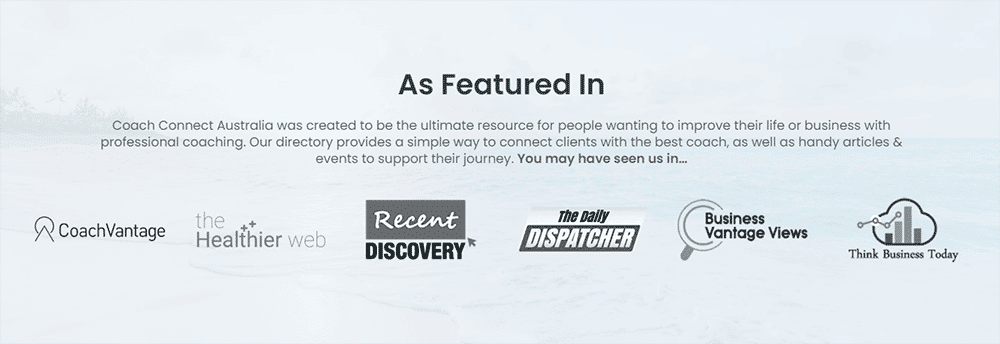
As Featured In

Achievements & Certifications

Have you managed to reach any milestones or achievements? If so, show them off! Showcasing any achievements you’ve had is another effective way to set your business apart. You could include:

  • Any certifications or qualifications you have (this doesn’t always have an obvious impact, but prospects see it as an indication of how knowledgeable you are in your industry)
  • Courses you have completed
  • Professional Memberships
  • Business nominations or awards
Statistics & Numbers

These are another great option and there is a heap of different ways you can do it depending on your niche. Here are some ideas:

  • Years in business – obviously if you’ve been around a while you must know what you’re doing!
  • Number of happy customers – similar to the above if you’ve worked with a substantial number of people that also demonstrates your authority
  • Case studies – These allow you to provide quantifiable evidence that your product or service works
  • How many hours or $$ you’ve saved your clients
  • ROI: What numbers have your clients achieved that you can show off? % increase in profits, dollars earned, etc.

Pro Tip: The logistic, detail-oriented client, in particular, will absolutely love this kind of information! If they are your ideal customer, adding this data is definitely worth your time.

Final tips for building social proof:

? If possible, add your social proof near the claim it supports

? People connect with people so use imagery as much as you can. If your clients are ok with it, include their picture with their testimonial or case study

? When using logos, try to ensure the resolution and quality is good. I also recommend making them black & white so as not to distract from your branding too much

? If you don’t have a lot of logos to include just yet, that’s ok! Even 3-4 is better than none. You can always come back and update it later!

5. Introduce Yourself

This is your opportunity to tell your audience who you are, and what qualifies you to help them.

Pro Tips:

? Even though this is an “about” section, it’s actually not about you! So don’t just list your history and credentials or why you’re so great. Talk about how you can serve your customers.

? Keep it brief. Your homepage is a “taster” for the rest of the site. You can go into more detail within your dedicated about page.

? Include a photo of yourself or your team. Remember, you ARE your business, so showing yourself goes a long way in the process of building trust and likability.

6. Main CTA (Call To Action)

People are extremely unlikely to buy from you after the first visit to your homepage. More time is needed to nurture your leads through the sales journey. Your homepage is one of many steps in this process.

So, at this early stage, what else can you offer them to build on the relationship? What action would you like them to take next?

Most commonly, your main CTA will be for people to opt-in to your lead magnet and for good reason. Lead magnets are not just about building a subscriber list. Yes, that’s one of the primary purposes (because it allows you to market your offerings further), but they have so much more to offer:

? They allow customers to experience how you can help them without any risk because what you’re offering is completely free.

? If you give them a quick win, this will start your relationship on a positive note. Plus, it will also help make them more interested in your paid offers… If your free offer is great, imagine what they can get from your paid ones!

? You start to build relationships: people aren’t usually ready to buy from you straight away. A lead magnet is a means of beginning the process of nurturing prospects through the sales journey so by the time they speak to you, they’re a red hot lead.

? You can showcase your expertise by being able to provide a valuable resource. This will help establish you as an expert and position your business as the go-to resource.

? They qualify leads: If your offer is specific enough to a particular audience it can help you to focus on building relationships specifically with your ideal customers.

? It’s one method of building Know, Like & Trust which represents the journey a person takes when getting to know your business. They first have to know you. Then they can start to like you and finally begin to trust you. All essential elements in converting leads into customers.
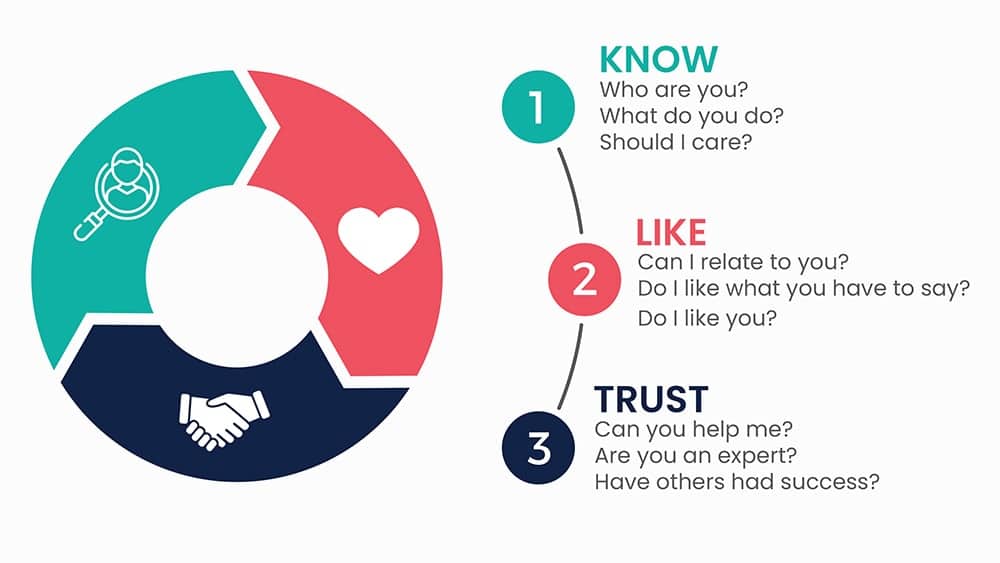
know like and trust

If you don’t have a lead magnet, here are a few other suggestions for your homepage CTA:

  • Showcase your most popular blog posts
  • Encourage them to visit a specific page (i.e. services or work with me)
  • Ask them to sign up for your newsletter (include a compelling reason why)
  • Link to your social media pages or groups to continue the conversation there

7. Don’t forget Your Footer

Being at the very bottom of the page, the poor footer section is often overlooked. The thing is though if people are given a reason to scroll, they will! So your footer deserves just as much attention as the elements above it.

I should note, that some elements (such as your copyright notice) should also be included in your footer. As this article’s focus is conversions though, I’ve stuck to those elements:

Links to social media

Your social media pages are another great avenue for building know, like and trust, as well as credibility and authority. As discussed above you don’t want them anywhere near the top of your page.

The point is to keep people on your website as long as possible. So the footer is a much better location.

Pro Tip: Set your social links to open in a new window rather than the same one, so they still have your website open in a tab and can come back to it easily.

Newsletter Opt-in

Either in or just above your footer is a great place to have your Newsletter opt-in

Pro Tip: Back in the day when getting emails was exciting and our inboxes weren’t filled with spam, capturing leads was easy. Today though, people are less willing to part with their details. They have to feel confident that there’s something of great value in it for them.

So, instead of just having a newsletter opt-in to “stay up to date with your latest news” – try to offer more incentives. Exclusive information, upcoming promotions, or a prime example would be in exchange for your lead magnet.

One final CTA

Every page on your website should have a CTA and I trust you have already covered your main CTA for the homepage, but you can pop another one in your footer too. This is particularly handy as it is accessible on every page of your site.

For example, you can remind them of and link to your main CTA. Or, link to your contact page or booking form.

Final Tips for Creating a High Converting Homepage

Know your audience:

Your website is a tool that represents your business online and connects you with your audience. So who are you hoping to reach? Who are your ideal customers?

If you don’t have complete clarity on who your ideal customers are, you’ll never know what they really need, let alone how to write compelling content that resonates and inspires them to buy.

So, before writing any copy for your homepage, I strongly encourage you to get crystal clear on your ideal customers. It literally forms the foundation of ALL your marketing efforts (website copy, content marketing, lead magnets, social media advertising, you name it!).

So, if it’s not on point, you’re really limiting your potential for everything else that follows it. I’ve already written an article about this which will help get you started. Check it out here ? Successful marketing: It starts with your ideal customer

Keep the content brief:

The homepage is an overview of your business – the primary purpose generally being to draw people in, not overwhelm them with too much information. It should be a “taste” of each of the other internal pages and act as the proxy for checking out the rest of the website.

Tech stuff:

We’re dealing with websites so some tech stuff is unavoidable. Essentially, you need to make sure your website’s usability is good. There’s nothing more frustrating than a website that has broken elements, is difficult to navigate, or is snail-paced slow.

People have very little patience with this. So, be sure to cover these elements as best you can:

  • Mobile Responsiveness – this is a MUST
  • Site speed
  • Easy navigation
  • Interactive elements all working (i.e. contact or booking forms)
  • No broken links
  • Simplicity: focus on what’s important, don’t distract people with unnecessary bells & whistles. For example, revolving slideshows or carousels used to be super-slick but no more! Plus, they can hide really valuable content.
Purpose-driven copy:

Combined with nailing the other features of your site (design, SEO etc.), having compelling website copy will give you the best shot at achieving your ultimate goal – converting visitors into customers.

If you can invest in a copywriter to help, great! If not, you don’t have to be a professional writer to create compelling content. You just have to follow some simple guidelines. Here are some quick tips:

? Get clear on your objectives upfront. Determining what outcomes you want before writing a single word, will help guide the content you create. As Stephen Covey, author of The 7 Habits of Highly Effective People said; “Begin with the end in mind.”

? Know Your Audience: As discussed above, if you have clarity on who your ideal customers are, it will be easier to write compelling content that resonates and inspires them to take action.

? Use powerful headlines: Most people scan written content, so your headlines need to be attention-grabbing and on point.

? Write in a way that is clear, concise and ideally reaches people on an emotional level.

? Avoid jargon and lengthy sentences. Break up text with images, headings, lists and graphics. Keep the language simple and easy to digest – If a 5th grader can read it, great!

? Don’t just talk about the features of your service, focus on the benefits and outcomes – that’s what people buy.

happy online shopper

Images:

The images you use on your homepage (and the entire website) can greatly impact the perception you give to your site visitors. If they are pixelated and of low quality, that can have a negative influence. If your site looks low quality, that can translate to the quality of your service too. ?

On the flip side, if you use high-quality images that showcase your personality, that can leave a positive impact. ?

Finally, using stock images (quality ones) is sometimes unavoidable but whenever you can use your own images. They are far more personal.

Include videos if you can:

Current trends have shown a consistent increase in video consumption over the last few years and the value they provide can be tremendous. It’s a great way to deliver lots of information quickly, your site visitors can get to know you easier, and it’s a great way to stand out from your competition.

Be realistic:

If you can’t check everything off in this guide, thank’s ok! For example, perhaps you’re just starting out and only have 1 or 2 reviews, or maybe none at all. Don’t stress. We all have to start somewhere, but at least you can make a start!

Also, get your head around the concept that your homepage and site as a whole will NEVER be done. Websites are not meant to be static, they need to be constantly evolving. Factor in some regular time in your schedule to work on it.

Be yourself:

I’ve already said above that you ARE your business so don’t be shy, let your personality shine! Allow your audience to get to know you. It’s the best way to discover if you’re a good fit for them from the get-go, and if you’re not, that’s ok! You only want to attract your ideal customers.

If you’re a nerd like me, geek out! If you’re full of energy, be bubbly. If you’re serious and systematic, be so… Whatever you do, just be yourself.

High Converting Homepage Checklist

I know this was a long read so if you made it this far, you’re awesome!

Now, as promised, here’s a handy checklist that covers most of the elements discussed above. Check all of these and your homepage will be in great shape!

? Pretend you’re a client – have a quick glance at your homepage. Do you immediately know who you are, what you offer and why it matters?

? Is your copy easy to understand, jargon-free and clear? Can a 5th grader understand it?

? Have you demonstrated social proof and why people should trust you?

? Are there strong CTAs (calls to action) telling your site visitors what to do next? And are those next steps easy to find/use?

? Do you offer something juicy that encourages people to sign up for your newsletter or get in touch with you?

? Have you included pictures of yourself or your team and given visitors a taste of your personality?

? How does your website look on your phone?

? Is it easy to navigate, loads quickly and everything works properly?

And that’s a wrap!

Again congrats on getting this far. I know there’s a lot of information, but don’t be overwhelmed. Just chip away one task at a time. Like anything worth doing, the effort will be worth it!

And remember…
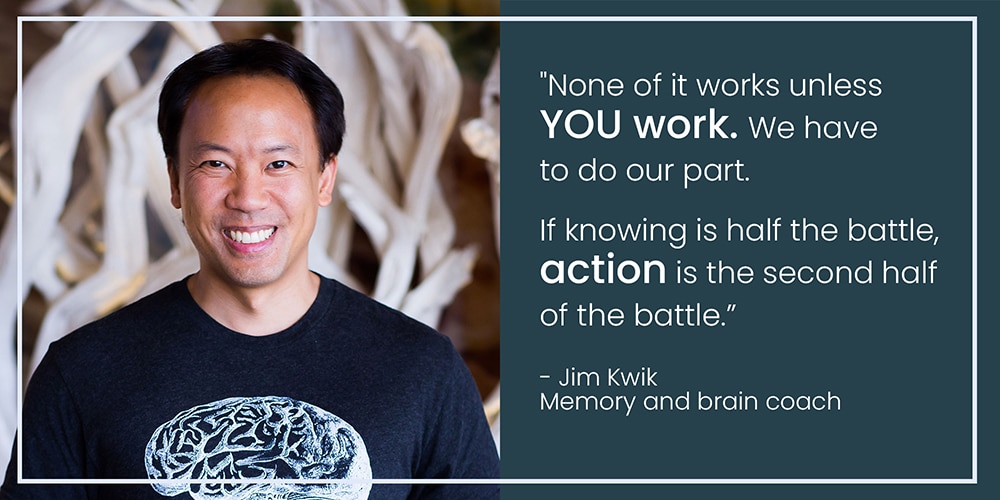
Jim Kwik Quote

I hope you’ve gained plenty of takeaways that you can start implementing straight away and see your conversions skyrocket!

And if you would like help with creating a client-converting website, I would love to hear from you. Take a look at what I do here: Coaching websites that work.

All the best,
Libby ?
Coaching Website Specialist
Rivmedia Web Design

The post High Converting Homepage Guide: 7 top tips for more leads appeared first on Rivmedia Web Design.

]]>

http://rivmediawebdesign.com.au/high-converting-homepage-guide-7-top-tips-for-more-leads/feed/ 0
Nail your website keywords to improve SEO & website clicks http://rivmediawebdesign.com.au/nail-your-website-keywords-to-improve-seo-website-clicks/ http://rivmediawebdesign.com.au/nail-your-website-keywords-to-improve-seo-website-clicks/#respond Sun, 17 Jul 2022 01:56:49 +0000 http://rivmediawebdesign.com.au/?p=97833 Adding website keywords helps you rank on search engines enabling clients to find you. Get more clicks to your site with our simple 6-step checklist!

The post Nail your website keywords to improve SEO & website clicks appeared first on Rivmedia Web Design.

]]>
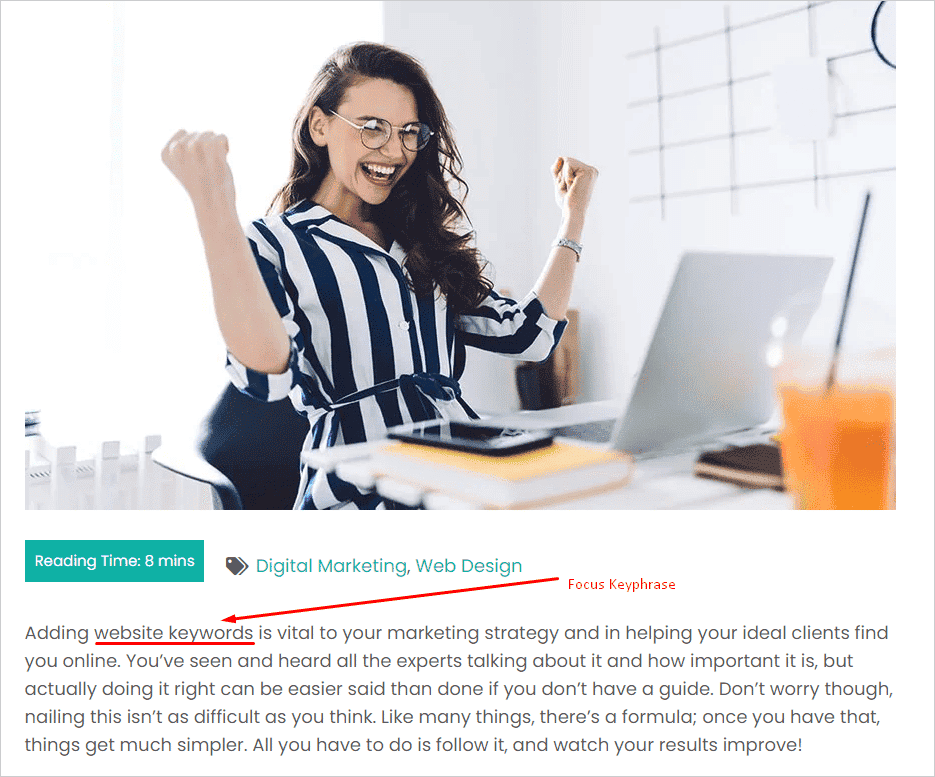
Adding website keywords is vital to your marketing strategy and in helping your ideal clients find you online. You’ve seen and heard all the experts talking about how important it is. Actually doing it right though can be easier said than done if you don’t have a guide.

Don’t worry though, nailing this isn’t as difficult as you think. Like many things, there’s a formula; once you have that, things get much simpler. All you have to do is follow it, and watch your results improve!

In this article, I’ve set out, step-by-step how to implement your website keywords in a simple checklist. When you’re done, you can finally get more, higher-quality leads landing on your website.

First, let’s quickly cover the terminology:

Website Keywords: These are a word or phrase that tell search engines what the content on your website is about. It also refers to what people pop into search engines. If what they’re searching for matches the keywords used on your site, that’s how you show up in the search results. Your position in the results (ranking) depends on a number of factors. Getting your website keywords right is a very important one in your overall SEO strategy.

Focus keyword: You may have several keywords that you want your content to rank for, especially if your content is long. The focus keyword, however, is the primary keyword or phrase you want to rank for. It is used in your title, URL, meta description, text and images.

Long-tail keywords: These contain 3 or more words and are really effective in targeting a very specific market. For example, “Life Coach” is a very broad keyphrase and would have a tonne of competition. Therefore, it would be difficult to rank well for it. A long-tail keyword though such as “Melbourne Self Esteem Coach” is more specific, making it easier to rank as well as reach a more targeted audience.

SEO: Simply put, SEO (Search Engine Optimisation) is a combination of practices put in place to improve your appearance and ranking in search engine results. It includes things like keywords, using headings correctly, image alt tags, appropriate linking and more. As this article is focused on optimising your website keywords, we’ll just stick to that.

choosing website keywords

First, choose which website keywords to use

You need to find which search terms your target market is entering into search engines. Don’t just assume you know them. For best results, take the time to do some research. You might be surprised and even uncover some interesting and useful results.

For example, say you’re a relationship coach who offers support to those going through a divorce. Terms your potential clients might search for could include “How to cope with divorce”, or “dealing with divorce.” If you’ve written an article on these specific topics and optimised your keywords, you not only increase your chances of ranking higher (and getting more clicks!) but also increase your chances of reaching a very targeted audience and your ideal clients.

The point here is that you know your business inside out. So, your mindset of what you would search for online will vary from the mindset of your target market. Take the example above again. Some people may not even be aware of coaches that specialise in helping people through a divorce. So, they’re unlikely to search for your services specifically (e.g. “Divorce Coach”). After using the above search terms though, they could come across your website and find a really helpful article, initiating their customer journey with you. ?

Some tools to help you with your website keywords research:
  • AnswerThePublic – get instant, raw search insights, direct from the minds of your customers. You can search 3 keywords per day for free.
  • Google – pop in a keyword and look through the results for inspiration for more. Plus, down the bottom, Google even generates a list of “Related Searches”
  • Google’s Keyword Planner – Find the right keywords with their research tool.
  • Google Trends – This is a handy tool that analyses the popularity of search queries and compares search volume
  • Ubersuggest is great for helping you discover new keywords. You can get a lot of data with the free option.

Once you have your keywords and have determined your focus keyword for your page, post, product etc. It’s time to optimise them. Here’s how…

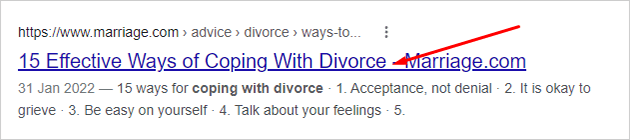
1. The Title Tag

website keywords - title tag

This is the blue link in Google search result pages that users click to go to your website. It is propagated either from your content or whatever you input into your SEO plugin or app (for WordPress users I recommend Yoast or RankMath).

Tips:
  • Your focus keyword should be within the title and for best results, place it right at the beginning
  • Your page title should be a H1 heading and there should only be one H1 heading, the rest should be sub-headings; H2-H6)
  • Always try to include emotional words, power words or numbers (try Coschedules headline analyser for more info… and to make your titles more engaging!)
  • It should be no more than 55-60 characters in length to ensure the whole title is visible (on desktops and mobile devices)
  • You should always have unique title tags, don’t duplicate the same title tags on more than one page of your website
Example:

Focus Keyword: coping with divorce
Title Tag: Coping with Divorce: An essential guide to heal and move forward

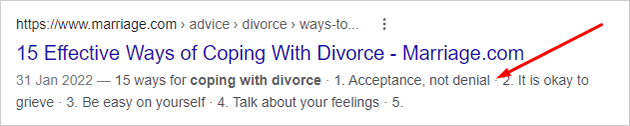
2. The Meta Description

website keywords - meta description

This is the snippet of text that appears below your Title Tag in search result pages. If the keywords being searched for are within your meta description, search engines will also make them bold, making them more visible and increasing your chances of click-throughs.

Tips:
  • Include your focus keyword in the meta description. There isn’t an ideal location, just as long as it’s in there. Also, be sure to accurately summarise your page’s content, and make it engaging.
  • It should be no more than 155-160 characters in length to ensure the whole snippet is visible (on desktops and mobile devices)
  • As with title tags, you should always have unique meta descriptions, don’t duplicate them on more than one page of your website
Example:

Focus Keyword: coping with divorce
Meta Description: Coping with divorce can be intensely painful, causing substantial grief & stress. Our tips will help you process your emotions, heal & start to move on

4. URL

This is your page link. For example, www.yoursite.com

Tips:
  • Remove less powerful words or stop words (and, or, but, of, the, a, etc.) to make it simple and precise, just make sure your focus keyword is still in there and that it makes sense.
  • Shorter URLs have been shown to have a better chance of ranking higher than long URLs. There’s no hard and fast rule for the length, but aim to keep it as close to 75 characters or less. See our examples below.
  • Use all lowercase letters and separate each word with a hyphen (-), don’t use underscores (_)
  • They should be easily readable both by humans and search engines. In this URL for example, www.mysite.com/post?ID77&kw=coping+divorce – you can guess what the page’s content will include but it isn’t as clear as it could be
  • Avoid using dynamic URLs when possible. This is a URL where the content for the page is pulled from the database. You can usually spot them as they include characters like: ? + &. They look messy and aren’t SEO friendly
  • Don’t keyword stuff, your focus keyword should only be in the URL once.
Example:

URL from the title:
www.yoursite.com/coping-with-divorce-an-essential-guide-to-heal-and-move-forward/
URL shortened and stop words removed:
www.yoursite.com/coping-with-divorce-guide-move-forward/
URL with focus keyphrase only:
www.yoursite.com/coping-with-divorce/

5. Keyphrase in Introduction

website keywords - introduction

Your focus keyphrase should also be at the very beginning of your content. This reinforces what your content is about and also reassures site visitors that what they have clicked through to is what they are looking for (i.e. it’s not clickbait!)

Tips:
  • Different plugins/apps will give different guidelines, such as it being within the first 10% of the content or within the first 100 words. A good rule of thumb is to make sure it is included within the first sentence
  • This first sentence should be SEO optimised, but also still needs to make sense and sound natural. Another rule of thumb; write for your site visitors first and Google second

5. Sub-Headings and page content

We’ve already discussed including your focus keyphrase in your title (which if your website is set up properly should be a H1 tag). You should also include it in your sub-headings, i.e. H2, H3, etc. and body content (paragraphs).

Tips:
  • Google pays the most attention to your H1 and H2 headings. However, the others are not ignored and should also be considered in your website keywords strategy.
  • Many site visitors scan content, that’s why it’s also important to include your keywords in your headings to help grab their attention
  • Seeing as the focus keywords should be related to the topic of the post, including them within your content (paragraphs, not just headings) should happen naturally, just ensure you don’t overdo it. Not only does it get irritating for readers to see the same words over and over again, but including them too many times can lead you to be penalised by Google if they see it as keyword stuffing
  • There is no set rule for how many times your keyword should appear in your content, especially as the amount of content each page/post has can vary significantly. As a guide, aim for a density of 1-1.5%. What this means is for every 100 words, the keyword should appear 1 to 1.5 times.
  • If in doubt, you are better off having a low keyword density than one that is too high. Keep your language natural; if the search engines don’t penalise you for it, your site visitors definitely will!

6. Image Name & ALT tags

An ALT tag specifies an alternate text for an image and improves accessibility for people who either can’t see the images or if they failed to load. Furthermore, they help search engines better understand not only what the image is about, but what your page’s subject matter is. They are also useful as anchor text should the image be used as a link.

Tips:
  • Make the ALT text useful, informative and use keywords appropriately
  • Avoid filling all image ALT tags with the same keywords over and over (this is also keyword stuffing)
  • Don’t forget the image file name: Name it appropriately with hyphens separating each word, no funny characters, and all lowercase
  • Naming your image and using appropriate ALT tags will also help in having your image show up in Google Image search results

Here’s a handy article on how to add ALT tags for your WordPress website as well as some more best practice guidelines.

And voilà, that’s it! ?

On a final note, I fully appreciate that for many people, optimising your website keywords isn’t as much fun as other aspects of your business. Some put it off altogether because it’s boring, or they don’t think they will get it right. But even some SEO is still far better than none. So, have a crack and do the best you can. Give yourself time to get better at it and before you know it, it will just be part of the routine that you barely notice each time you create new content.

The whole point of this article is to help improve your chances of getting more eyes on your website, more leads and more conversions. Yep, this stuff isn’t glamorous. But, it’s a vital tool in making the above happen. Again, it may be tedious and individually each item on the checklist probably doesn’t seem that consequential. Remember though, “A waterfall begins from only one drop of water. Look what comes from that…

Grampians Waterfall long exposure

The post Nail your website keywords to improve SEO & website clicks appeared first on Rivmedia Web Design.

]]>
http://rivmediawebdesign.com.au/nail-your-website-keywords-to-improve-seo-website-clicks/feed/ 0
Kick-Start the New Year with this simple, yet important website update http://rivmediawebdesign.com.au/kick-start-the-new-year-with-this-simple-yet-important-website-update/ http://rivmediawebdesign.com.au/kick-start-the-new-year-with-this-simple-yet-important-website-update/#respond Wed, 19 Jan 2022 07:14:26 +0000 http://rivmediawebdesign.com.au/?p=92107 Don't make the mistake of overlooking this crucial & impactful task that will help boost your online reputation as well as protect your brand

The post Kick-Start the New Year with this simple, yet important website update appeared first on Rivmedia Web Design.

]]>
We’re at the start of the New Year which is often a time when people think about making updates to their websites. One change that is incredibly important to make is also a task that so many overlook. Your website copyright date.

Ok, so it’s not as exciting as adding new products, changing some images, or uploading a new blog post. But, it’s more important than most people realise, for 2 crucial reasons:

  1. To build trust and boost your brand’s reputation
  2. To protect your hard work and IP (intellectual property)

A quick note: The following information is for guidance only. I’m not a solicitor so this is not legal advice. It is written based on my knowledge of online marketing, website best practices, and Australian copyright law.

Now that I’ve covered my bum ? ?… For those that aren’t well-versed in website copyright, I have provided a quick and straightforward explanation of what it entails below. Then we can dive into why keeping it up-to-date is so important.

copyright symbol

What is a website copyright notice?

It is a notice saying that the work within the website is owned by you and is protected by copyright laws. This protection gives you the right to control how your material is used and most importantly, prohibits others from copying or using it without permission.

The good news for Australians is that as soon as you publish material online (blog post, written content, photos etc.), copyright ownership is automatically applied.

Things get a little more complicated when it comes to your website’s code and design, but that isn’t relevant to this particular post (important to chat about it with your web developer though). The main thing you need to know is this:

With the exception of working directly for an employer (does not include freelancing), unless they agree to transfer it, the person who created the material owns the copyright.

If you want more information on copyright issues concerning the creation and management of websites, the Australian Copyright Council has a very useful Fact Sheet you can download here.

If copyright is automatically applied, why do I need a copyright notice?

In short, because some people suck. ?

Content theft is prevalent on the internet. A common (and annoying!) misconception is that if something is online; because it’s readily available you are welcome to do what you please with it. This is not true. ?‍

Another reason is that some people are just jerks who steal content instead of investing the time and/or money to create their own. ?

Adding a copyright notice on your website is not a legal requirement to assert your rights, but it does make your ownership of the content clear and will hopefully help to discourage theft.

Why an up-to-date website copyright notice is so important

1. To build trust and boost your brand’s reputation

When a visitor lands on a site that has last year’s date (or worse, even older! ?), many will assume the content is also outdated and therefore of low value.

Or, it could even leave them with the impression that if the owner can’t be bothered to stay on top of such a simple task, what else are they neglecting? Are they lazy, disinterested or just don’t care?

We all know how important first impressions are and your website is often the first place people will go to check out your business. When it comes to websites, people do judge a book by its cover and will form an opinion quickly.

So, an outdated website can often come off as unprofessional and negatively influence how a customer perceives your business.

I explore this further in this article too if you’re interested:
How often should I redesign my website?

Your copyright date may be a small piece of the puzzle, but it all adds up and contributes to how you are perceived online.

Conversely, displaying the correct date will subsequently have the opposite effect.

You will help to build trust and authority by leaving visitors with the impression that your site is up with the latest trends and information. It also demonstrates that your website and online presence matter to you, and in turn, so do your customers.

2. To protect your hard work and IP

As mentioned above, content theft is sadly not uncommon, so by including a current copyright notice you are providing yourself with some extra protection. It also helps should an infringement occur and you need to take legal action.

A lot of time and/or money goes into creating the content that goes up on your website. So, having that content stolen can be really disheartening (not to mention aggravating!). Hence, doing what you can to avoid this experience is…

How to nail your website copyright notice

To be the most effective, you want your notice to be visible on every page of your site, which is why you will usually find it within the footer.

And, to be valid, it needs to include 3 parts:

  1. The copyright symbol ©, or the words “Copyright” or “Copr.”
    (You can use one or the other, or both.)
  2. Current year
  3. Name of the copyright owner

Current year: As websites are regularly updated, you have two options here. You can either provide the current year (2023).

Or, a date range indicating the year of original publication to the most recent (2014-2023). Either option is fine, it’s just a matter of preference. I personally prefer to keep it simple and just have the current year.

Name of the copyright owner: For individuals, you can simply use your name. It’s preferable that you use your legal name (i.e. not a pseudonym, handle or alias).

For businesses, you need to use your registered company name (not trading name) for the notice to be valid. For example, here’s my copyright notice: © 2023 Rivmedia Pty Ltd.

You will observe that it states Rivmedia Pty Ltd as that is my company name. Rivmedia Web Design is my trading name and as such is not a legal entity that can own IP.

Final Thoughts

Keeping your copyright date current is one of the simplest tasks to complete yet can have an impactful result. More so when combined with staying on top of your other updates and marketing strategies also.

So, kick off the New Year on a positive note. Show your visitors that you are up to date, that you care, and you’re on your game ?

ripple effect of small things quote

Need help with your website updates or marketing strategies?

Chat with me today to create a digital marketing plan for your best year yet!

The post Kick-Start the New Year with this simple, yet important website update appeared first on Rivmedia Web Design.

]]>

http://rivmediawebdesign.com.au/kick-start-the-new-year-with-this-simple-yet-important-website-update/feed/ 0
Post Covid-19: Now is the time you need to elevate your digital marketing http://rivmediawebdesign.com.au/post-covid-19-now-is-the-time-you-need-to-elevate-your-digital-marketing/ http://rivmediawebdesign.com.au/post-covid-19-now-is-the-time-you-need-to-elevate-your-digital-marketing/#respond Mon, 12 Apr 2021 04:49:23 +0000 http://rivmediawebdesign.com.au/?p=88069 Consumer habits are unlikely to go back to how they were pre-covid. See how you can get the most out of your digital marketing in 2021

The post Post Covid-19: Now is the time you need to elevate your digital marketing appeared first on Rivmedia Web Design.

]]>

Practical advice to stay competitive and get the most out of your digital marketing in 2021

No one can predict what is in store for the business world post-COVID-19. What we do know for sure is that when the pandemic forced everyone indoors, they turned to the internet to consume information and shop online, making digital marketing a top priority for all businesses.

With our ever-increasing busy lifestyles and the convenience the online world provides, this shift in habits is unlikely to go back to how it was before the pandemic, the consumer landscape has changed forever.

So, in order to stay competitive, businesses need to continue to evolve.

If you’re in the process of building or revitalising your digital marketing, here is some useful information and actionable steps to help you stay on track.

digital marketing

Smart digital marketing tips post-COVID

Today, there’s no telling when the post-COVID era will happen exactly. But what’s certain is that after the pandemic ends, businesses will continue to work on rebuilding themselves or may even need to start from scratch.

Brick-and-mortar industries might have to work harder to reach an ideal level of stability. However, the future seems brighter for online businesses, as more shoppers have been and will continue to make purchases online because it’s cheaper and more convenient — with or without a pandemic.

This means that when businesses and people recover from the effects of the pandemic, all your digital marketing efforts will continue to pay off and provide your business with that competitive edge.

But if you haven’t ramped up your digital marketing strategy before, now is a good time to start by implementing these tips:

digital marketing

1. Update your website.

Now is the time to do a site audit and see your website for what it is. Does it load slowly? Does it look old-fashioned? Is it functional, responsive, and user-friendly?

During your site audit, make sure you identify information, photos, and other media or content that require updating. Fix errors and take note of page loading times. Check out competitor websites to find out if there’s anything you’ve missed or information you should be providing but isn’t there.

Ensure your website is mobile-responsive and if it isn’t, brace yourself for the possibility of needing to build an entirely new website.

>> See our tips here to help you get the most out of your current website as well as questions to ask to determine if it’s time to re-develop.

mobile responsive website

2. Post content regularly on social media.

If you have social media accounts set up for your business, start using those to reach out and engage with your audience.

Social media is a great space to put the word out about your company, products, and services, even on a tight budget. There’s also plenty of content you can include in your social media calendar, including:

  • Updates about your products/services, including launches
  • Sale or discount promotions
  • Photos or videos of your offerings
  • Content that gives your audience an insider’s look into what goes on in your business
  • Live selling or promotions
  • Games, quizzes, surveys
  • Content about or from your brand ambassadors
  • Testimonials and reviews
  • A featured employee of the month
  • Corporate social responsibility events or programs
  • Videos or images that resonate with or relate to your brand

>> Check out more awesome social media posts ideas by Sprout Social

3. Improve customer service.

There are plenty of opportunities to show your leads and customers you care by providing personalised and prompt customer service. This includes answering enquiries and replying to comments or reviews in a timely manner. Your staff needs to not only be able to address questions and comments but also be trained on how to respond properly to negative reviews and when to escalate certain complaints.

Customer service continues to make a big difference in how loyal consumers are to certain brands. By providing your customers seamless, professional customer service, the more loyal they’ll be and more likely to refer your business to their own network.

customer service

4. Optimise your consumer database.

In the course of conducting your business, you would have collected a number of email addresses, social media accounts, and mobile phone numbers. Use these to your advantage in creating integrated email and SMS blasts and social media campaigns.

You should also dig into your customer database and take time to get to know your buyer personas and who your customers really are. You can also tap into your leads and see if you can reconnect and engage with them so they turn into customers.

5. Outsource some of your digital marketing tasks.

If you have a small team or budget and do not have the expertise to handle digital marketing tasks, it might be time to look into outsourcing these to digital marketing experts. These include website development — which we can definitely help you with — plus website marketing, social media marketing, e-commerce store setup, and so on.

This way, you won’t need to hire full-time employees to perform these highly specialised functions. Instead, you’ll have access to the expertise you need for as long as you want, minus the big budget for salaries and benefits.

business growth

Business growth post-COVID

One of the biggest and hardest lessons companies worldwide have learned from the pandemic is that the most agile businesses that can easily adapt to changing times not only survive but also thrive amidst crises like COVID-19.

This business agility pertains to companies being able to work with an online business model — or, at the very least, having an online presence. So don’t get left behind.

For your web design or digital marketing needs, you can find plenty of info here on our website, or feel free to get in touch with us for a chat. We can work together to build or boost your digital presence and optimise your business growth.

Further Resources:

The post Post Covid-19: Now is the time you need to elevate your digital marketing appeared first on Rivmedia Web Design.

]]>
http://rivmediawebdesign.com.au/post-covid-19-now-is-the-time-you-need-to-elevate-your-digital-marketing/feed/ 0
Why is my website traffic so low? (and what to do about it) http://rivmediawebdesign.com.au/why-is-my-website-traffic-low/ http://rivmediawebdesign.com.au/why-is-my-website-traffic-low/#respond Wed, 29 May 2019 01:25:13 +0000 http://rivmediawebdesign.com.au/?p=13721 There's nothing more frustrating than low website traffic. Here, we list factors that can affect traffic & what you can do to increase it.

The post Why is my website traffic so low? (and what to do about it) appeared first on Rivmedia Web Design.

]]>

If you build it, they will come

After investing time and money into a website, there’s nothing more frustrating than low website traffic. In this article, we list the main factors that can affect site visits & what you can do to increase them.

if you build it

So many times I see people who mistakenly think that just because they launch a website, site visitors will automatically come. Truth is, this is not Field of Dreams and just because you build it does not mean customers will magically appear, no matter how good your website is.

Think of it this way, if you held a party but didn’t send anyone an invite, how many people would even know about it, let alone turn up?

Beyond that, even if you are promoting your website gaining those clicks is getting harder and harder. It’s mandatory for practically all businesses to have a website now so the internet is heavily saturated with competition making it difficult to rank well and stand out from the crowd.

Factors that can affect website traffic & what you can do

Brand New?

If your website is brand new it won’t just appear in search engine results immediately. First, your site has to be submitted to search engines and then they need time to crawl your site and index it. Be patient and make sure everything is done on your end (site submission, sitemaps etc.) to help this process.

Hopefully, your web designer has already done this for you, but if not, here’s a great article to help you out: How to Submit Your Website to Search Engines.

SEO (Search Engine Optimisation)

It goes without saying that having a quality website to begin with is an important factor but not just in how it looks, but in how it performs too. A lot of the factors covered below can be held under the umbrella of SEO and if you manage them all: Good SEO = better ranking = increased website traffic.

Your website has to be optimised to help get people to it in the first place. This is where in-site SEO comes in,  such as appropriate use of keywords, proper use of titles and meta descriptions, quality code, optimised images and so on.

This is such a large field it’s impossible to cover everything, so my advice on this point is to either ensure you find yourself a web developer that is proficient with it or be willing to invest a good deal of time in educating yourself about it.

Use social media

The impact of social media on website traffic is two-fold. Firstly, if you have reasonable engagement and social shares, these can help your Google ranking as well as expose you to a wider audience. Secondly, the posts themselves can drive traffic to your site via page links, blog posts etc.

Best of all, you can take advantage of all of this for free! Of course, you can use the paid facilities to boost things further, but if you’re sharing quality content you might not need to spend a cent.

If the thought of posting regularly on social media makes you cringe, there are a few options to consider. Firstly, there’s a huge market for social media managers out there, so if you have the budget, outsource it!

However, if you need to manage it yourself and posting regularly is too hard, aim for at least once a week or even once a fortnight… anything is better than nothing. There’s a range of scheduling tools that are available to help make this easier; Facebook, for example, has its own in-built scheduling tool and one of my personal favourite all-rounders is Later.

Don’t forget why you’re reading this article;
you want more website traffic and social media is an effective way of getting it.

Finally, choose your platforms wisely; you don’t have to be on all of them. For example, LinkedIn is effective for B2B companies, whereas creative businesses tend to have better engagement on Instagram & Pinterest.

Find out which ones are best for your industry and stick to them. Setting up a page isn’t enough, you need to be active on your accounts. So if time, motivation and/or budget are a problem, I suggest choosing 2 and doing those well.

Are you blogging?

Blogging can be time-consuming and at times tricky to come up with new content, but it’s a worthwhile exercise. By creating regular new content you can achieve the following;

  • Provide helpful and/or engaging content that your readers will appreciate (which hopefully results in a share or purchase)
  • It shows Google that your website (and business) is active and fresh thus helping your ranking (Google doesn’t favour stale websites)
  • If you blog quality content, it too will rank well and drive more traffic to your site
  • It also provides additional content you can share on social media.

Google Analytics

If you’re not utilising Google Analytics, you should be! It’s a great tool for understanding your site visitors and how they engage with your website. It provides insights into what you are doing well and what you can improve.

What works is always changing so this is an ongoing process and one you should get used to checking in on. It takes a while to build up enough data to start analysing it, but once your site has been up for at least a few months you can start experimenting and tweaking.

Poorly performing website

If a website takes too long to load, is difficult to navigate, confusing, unattractive, or just plain boring people can be pretty brutal and leave very quickly. This can affect what is called your “bounce rate.” A high bounce rate (where people leave your site quickly) can be interpreted by Google that your site is obviously of little value, which can lower your rankings.

If you have google analytics installed you can check a number of statistics including bounce rates to help you determine what changes you need to make to improve things.

Mobile-friendly & secure websites

mobile-friendly website

With a huge number of website traffic coming from mobile phones, a responsive website is no longer optional but a must. If people can’t easily view and use your site on mobile, this too can affect your bounce rate which = lower ranking and less traffic.

Furthermore, the responsiveness of your site is a contributing factor to how Google ranks your site and you will be pushed lower than your competitor’s sites if you’re not meeting best practice guidelines. The same goes for sites that don’t have an SSL certificate (security for your website).

Here are a couple of related articles that explain the above in more detail:

Website not secure? – Here’s how to fix it
Is Your Website Mobile Friendly?

Keyword-focused content

Keywords are the terms and phrases that people enter into a search engine to find you online. So when writing your content you need to put yourself in your customer’s shoes, determine what they will search for and write your content accordingly. Doing this well will give you a better chance of your content showing up among the results.

At the same time, this has to be done the right way and if you go too far with it (this is called keyword stuffing) it can actually work against you and lower your rankings. A good rule of thumb is to keep keywords and SEO in mind, but write for your audience first and Google second.

Backlinks

No website was meant to be an island, but rather a part of a much larger interconnected “web” (www = world wide web). The number of backlinks your site has is an indication of its popularity and importance so to google these act as a thumbs-up so to speak because your content is obviously valuable if people are happy to link to it.

As with keywords, there are certain do’s and don’ts to avoid being penalised.

Do:

  • Create great content that people want to link to
  • Share on social media
  • Comment on other websites/blogs with relevant content – but don’t spam!
  • Guest post
  • Ensure your backlinks are quality links
  • Ask clients to link to your content

Don’t:

  • Pay for backlinking schemes
  • Send spammy emails asking for backlinks
  • Inject links into other websites

Final Thoughts

As you can see there are a number of factors that affect the amount of website traffic your site can receive. A lot of these factors may require professional assistance such as SEO (both in-site and external), content creation, social media management and so on. However, with a little time and education, there’s a lot you can do yourself with little financial investment.

It’s also prudent to remember that this is an ongoing process that you have to be consistent with.

The post Why is my website traffic so low? (and what to do about it) appeared first on Rivmedia Web Design.

]]>
http://rivmediawebdesign.com.au/why-is-my-website-traffic-low/feed/ 0
Are you ready for Gutenberg? http://rivmediawebdesign.com.au/are-you-ready-for-gutenberg/ http://rivmediawebdesign.com.au/are-you-ready-for-gutenberg/#respond Thu, 22 Nov 2018 06:02:13 +0000 http://rivmediawebdesign.com.au/?p=12903 Gutenberg is a new editor that will replace the current one in the next WordPress update. Here are some tips to help with the transition.

The post Are you ready for Gutenberg? appeared first on Rivmedia Web Design.

]]>

Are you ready for Gutenberg?

Gutenberg is a new editor that will replace the current one in the next major WordPress update. Here we provide some tips to help with the transition.

If you’re asking “What’s a Gutenberg?” it’s a new WordPress editor that will replace the current one in the next major WordPress update (November 27). Basically it’s an attempt to modernise the page/post writing experience by adding more features (similar to page builders).

It’s been available for a while for users to download and test out, but feedback so far hasn’t been great. At the time of writing this blog, most users are only rating it 1-2 stars (eek!). This doesn’t mean things will stay this way though; WP developers are updating it almost daily to make improvements.

The other problem is that it may not be compatible with some plugins or themes and could cause websites to not work properly or possibly even crash (unlikely, but possible). Apparently Gutenberg will be enabled by default, so this is obviously a concern.

This might all sound a little overwhelming but it’s all good, there’s always a way around it! ?

Our Recommendations

Hold off updating just for a little bit

One option is not to update your WordPress core. Now, this does pose a security risk by doing so, but as long as you have your back-up and security plugins in place I don’t see any harm in leaving this for a little bit and let everyone else test things out first. Then when all the kinks have been worked out, update then.

It’s important to know though that some WordPress core updates can be automatic (for security reasons). So if your site is updated automatically you could be in for a surprise, and not the good kind! To work around this, there’s a nifty little plugin that you can download called Easy Updates Manager which allows you to disable automatic updates. Here’s a quick video which shows how it works:

Easy Updates Manager Overview from UpdraftPlus on Vimeo.

Test out Gutenberg now

As mentioned you can download the Gutenberg plugin now to give it a test run. Before doing so though I strongly urge you to do a full back-up of your site, the current version is still a little unstable so you need to be careful with it. Ideally, if you have a maintenance page plugin installed, enable it while you are testing to avoid any visitors coming to your site and not seeing it the way they’re supposed to (should Gutenberg cause any issues).

I use this one: Coming Soon Page & Maintenance Mode by SeedProd.

Once installed, you can get a feel for it and how it works, but more importantly, you will be able to see if/how it affects your site.

Install the classic editor

If you’re having compatibility problems or are just not ready for change yet, the WP developers have got you covered. You can install the Classic Editor plugin and keep using it until you are ready to make the switch. It will disable Gutenberg upon activation so it’s very easy to use.

An alternative option is the Disable Gutenberg Plugin. By default, it disables Gutenberg entirely, but you can opt to disable it by user role or post type (blog posts, pages, etc.) so you can test it out on each post type one at a time. For example, I use WP Bakery page builder for all my pages on this site, but just the default WordPress editor in my blog posts. So I used this plugin to disable Gutenberg throughout my site with the exception of blog posts so I could test it out there.

This would also be handy if you’re having compatibility issues with some areas of your site so need to disable it for those, but start using it in other areas.

So is Gutenberg good or bad?

It sounds like a headache and might be in the beginning, but I believe this is a positive step forward for WordPress users. The classic builder is quite limited which is why a lot of sites install page builders or just compromise with simpler layouts, particularly in blog posts.

The core team has given developers heaps of time to update their plugins and themes to make them compatible with Gutenberg, so making the switch might not be as big a deal as some are making out. However, it is possible that some plugins/themes won’t be fully compatible, but as discussed above, there are tools available to work around that for now.

Change is hard and it can be frustrating having to learn something new… yet again. Without change though, we can’t stay in-line with modern trends and our businesses cannot grow and evolve.

I personally don’t mind the new editor, but I don’t love it either. I’ve only tested it within blog posts thus far and yes there are quite a few kinks that make it not quite ready to use yet, but I can see its potential.

Don’t be frightened of change, get excited for what the future holds!

The post Are you ready for Gutenberg? appeared first on Rivmedia Web Design.

]]>
http://rivmediawebdesign.com.au/are-you-ready-for-gutenberg/feed/ 0
Important PHP security update website owners need to make before 2019 http://rivmediawebdesign.com.au/important-php-security-update/ http://rivmediawebdesign.com.au/important-php-security-update/#respond Tue, 06 Nov 2018 05:08:59 +0000 http://rivmediawebdesign.com.au/?p=12784 If you have a CMS website (WordPress, Joomla, Drupal etc.) chances are there's an important security update you NEED to make before 2019.

The post Important PHP security update website owners need to make before 2019 appeared first on Rivmedia Web Design.

]]>

Important PHP security update

If you have a CMS website (WordPress, Joomla, Drupal etc.) chances are there’s an important security update you NEED to make before 2019.

If your website is built on a CMS system (WordPress, Joomla, Drupal etc.), there are some important changes coming up you should be aware of. These kinds of websites are built using a programming language called PHP. I won’t bore you explaining what that is, all you need to know is that it is the code used to create your website, and very soon a version of it is going to become vulnerable to security issues.

Just as there are WordPress and plugin versions, there are also versions of PHP. A very common one (PHP 5.6) is about to reach what is called end of life (EOL) by the 31st December 2018.

What this means is, there are newer versions of PHP available so support for the older versions will cease. Therefore, sites running on these older versions will become vulnerable to any new PHP 5 threats because security updates will no longer be provided.

Don’t panic, this doesn’t mean that your site will be hacked if you don’t upgrade, but leaving it does increase your risk. It’s the same as your WordPress core, theme, and plugin updates. They are updated to improve functionality, resolve bug fixes, and patch any security vulnerabilities. Not updating doesn’t necessarily mean that your site will be hacked, but it certainly increases your chances.

The following table shows important dates for PHP 5 and PHP 7:

Here’s what you need to know

Firstly, Find out what PHP version your site is running on. If your website was built more than 1- 2 years ago, chances are strong that you’re running on 5.6. However, even if you have a newer website, it’s still worth checking because many hosting companies still set the default PHP version to 5.6.

According to stats from wordpress.org shown in the pie chart below, about 60% of all WordPress sites are using older versions of PHP. So statistically your site has a high chance of being among them.

If you don’t know where to look to find this setting, you can either ask your web developer, hosting company, or use a plugin such as Display PHP Version.

If you find that you’re site is running on PHP 5.6 or older your next step is to ensure that your theme and plugins are compatible with PHP 7 before upgrading. Here’s another handy plugin that can help with that: PHP Compatibility Checker.

Regularly updated themes & plugins should be fine but if something isn’t compatible, you will have to consider alternatives. It’s probably a good idea to do so anyway if they’re not up to date.

How to upgrade

If you’re unable to do so yourself, again you can either get your web developer or hosting company to make the PHP upgrade for you. As always, have a full back-up of your site on hand before making any major changes.

Once you do, it’s also wise to completely clear your website & browser cache to ensure everything is still working as it should.

With regard to which version specifically you should upgrade to, ideally, it should be PHP 7.2 (the most recent version) which is fully supported till the end of 2020. If this isn’t possible, then at least 7.1 as security updates for 7.0 also ends very soon (3rd December 2018).

As a bonus, upgrading to PHP 7 comes with a number of benefits. Most notably, improved website performance and site speed, so get upgrading!

Need help keeping your PHP version up-to-date?

If you would like help from us with this, feel free to either contact us here to discuss options.

The post Important PHP security update website owners need to make before 2019 appeared first on Rivmedia Web Design.

]]>
http://rivmediawebdesign.com.au/important-php-security-update/feed/ 0
Website not secure? – Here’s how to fix it http://rivmediawebdesign.com.au/website-not-secure-how-to-fix/ Sun, 15 Jul 2018 00:55:46 +0000 http://rivmediawebdesign.com.au/?p=10985 Is your website displaying that pesky "not secure" warning on Chrome? We explain what this means and how to secure your website.

The post Website not secure? – Here’s how to fix it appeared first on Rivmedia Web Design.

]]>

Website not secure? – Here’s how to fix it

Is your website displaying that pesky “not secure” warning on Chrome? We explain what this means and how to secure your website.

Is your website displaying that pesky not secure warning on Chrome?

If so you might have missed a recent update where chrome browsers would start marking websites without an SSL certificate as not secure as of July 2018.

not secure warning

No idea what an SSL certificate is?

All good, I’m going to explain that:

An SSL certificate creates a secure connection from a web server to a browser. Essentially what this means is it makes it harder for hackers to see the details being shared, such as personal information when completing forms, login details, credit card information and so on.

This used to only be required for e-commerce sites but with online privacy being such a large issue now google is encouraging this to improve online security for all websites.

A site without an SSL has a domain that starts with just HTTP and will display the not secure warning. A domain with an SSL starts with https and will show the domain as secure.

Why Your Website Really Needs an SSL Certificate

You can leave your site as is if you like it will continue to work, but here are a few very strong reasons your website needs an SSL:

  1. Customer Trust – when site visitors see the not secure warning this could create a bad impression or make them hesitant to interact with your website.
  2. Search engine ranking – In an effort to make the internet safer, google rewards sites that have an SSL certificate, making them rank better than those without.
  3. Security – The purpose of an SSL is to secure information being sent across the site, protecting your personal details and providing protection from phishing attacks.

So there are some pretty strong incentives to make the switch!

How to add SSL to your site

1. Get yourself an SSL certificate

Most hosting companies will provide one for free as part of their hosting package so it’s worth getting in touch with them to find out. Otherwise, you can expect to spend anywhere between $50 – $250 / year (in the majority of cases).  Price varies with certain inclusions/ad-ons that come with the certificate.

2. Install it on your website

After you have enabled the SSL for your domain, you then need to install it on your website. This can be done via a couple of methods;

a) via the use of a plugin that sets up redirects from HTTP to HTTPS. This is a quick and simple way to do it, however, you usually have to leave the plugin in place or it could create mixed content errors if you remove it afterward.  Furthermore, having some redirects on your site is ok, but it can sometimes affect site performance and page rank.

b) A more permanent (and better solution) is to manually edit the WordPress files or do a fresh re-install of your site using the https protocol. You will most likely need the help of a developer to sort this out for you. If you would like our assistance please contact us.

Helpful Links

Here are some related articles you might find useful:

The post Website not secure? – Here’s how to fix it appeared first on Rivmedia Web Design.

]]>
Your website is your most important online asset… isn’t it? http://rivmediawebdesign.com.au/your-website-is-your-most-important-online-asset-isnt-it/ Tue, 24 Apr 2018 05:10:23 +0000 http://rivmediawebdesign.com.au/?p=3492 It's reasonable to think that your website is, but you would be wrong. Your domain name is because without it no one will see your website.

The post Your website is your most important online asset… isn’t it? appeared first on Rivmedia Web Design.

]]>
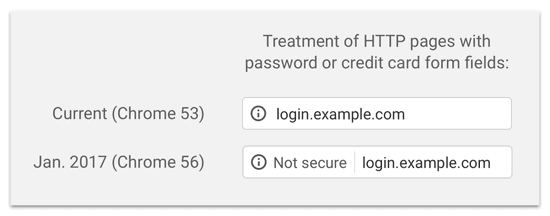
Your website is your most important online asset… isn’t it?

For most businesses, it’s reasonable to think that your website is your most important online asset, but you would be wrong. Your domain name is, because no matter how awesome your site is, without the domain name no one will see it.

You might be screwing your face up now thinking how is this possible seeing as you got your domain name when your web designer built your site… But did you?

You would be surprised just how many domain names out there aren’t actually owned by the business, but rather by their web designer. So technically, this means that you have no control over your own website.

You might not realise yet just how big a deal this is but consider this one scenario; if your web designer (and owner of your domain) closes their business, who is going to make sure your domain (and probably website hosting too) is kept active?

If payments aren’t made and it lapses, your website goes down, and as the domain and hosting accounts aren’t in your name to rectify this… well you’re in a bit of a pickle!

Have I got your attention? Great, then please keep reading:

When creating a new website, many people will first find themselves a web designer and let them take it from there. One major aspect of creating a new website though is purchasing a domain name and hosting; the importance of which is often grossly underestimated.

If you’re not 100% clear with what the above terms mean, I’ll quickly explain before we delve further:

  • A “domain name” is the address by which people visit your website, for example, www.yourwebsite.com. You have to purchase it through a domain registrar and pay an annual fee to keep it. Your domain name is just a name, it is not your website;
  • For that, you will need “web hosting” to attach your domain name to. Your web hosting account is where all the files that create your website are stored and also requires on-going payments to remain active.

It’s similar to when you get a phone number; you’re given a number such as (equivalent to your domain name) and then you purchase a monthly phone plan to host that number (equivalent to your web hosting). You have to have both; one doesn’t work without the other.

For most people new to websites, purchasing a domain name and hosting can be a little daunting, so the task is carried out by their web designer, but as such, it is often done in their name, not their client’s and the consequences of this aren’t always explained fully or the client may not even be aware.

At Rivmedia we insist that all of our clients manage their own domain name and hosting as we believe it is in their best interests to do so. Here’s why:

  • Firstly, if you buy something directly rather than through a middle man you will save money which is an obvious advantage
  • Your domain name is an asset, it has value; it is very much a part of your business as your company name, logo, and so on, so why would you want it owned by anyone else?
  • With the above in mind, what if you were to sell your business down the track? The website would obviously be included in the sale but if you don’t actually own your website’s domain and/or hosting… Well, that’s going to complicate things.
  • What happens if your designer closes their business, retires, or as sometimes sadly happens, just disappears and never returns your emails or phone calls? How are you going to ensure your domain and hosting stay active?
  • Or furthermore, what if you want a redesign of your site but through a different designer, or want to move your hosting elsewhere if you’re unhappy with it or simply found a better deal?

All of the above can, and has happened.

If you aren’t in control of your domain and/or web hosting, moving to new providers becomes that much more complicated if the account isn’t in your name. If we refer back to our phone analogy, imagine trying to call Telstra to change your phone plan when you aren’t the account holder?! Ummm… nightmare!

Unfortunately, I have been contacted several times by clients who have found themselves in this very situation, and believe me if you can avoid it, you should!

At this point, I do want to make very clear that I am not trying to tarnish other designers and I’m not saying that those who purchase your domain and/or hosting are wrong or unprofessional. In the majority of cases, they’re just trying to make the process of getting your new website easier.

Regardless, I personally don’t agree with this for the above reasons. In short, by taking ownership yourself you save money and a valuable part of your business is owned by you, not your web designer.

My clients can also have peace of mind knowing that in the future should I happen to move away from web design (I don’t foresee this happening anytime soon but you never know!) they won’t be left in the lurch. They will own and have full control over their domain and hosting so they will not have to go through the frustrating and sometimes costly process of transferring ownership.

Conclusion

For those just starting out:

I strongly urge you to own your domain and hosting from the start, purchasing them is actually much easier than you think, and we’re happy to walk you through it step by step. Afterward, you can give access to your domain and hosting to whoever you please, such as a web designer to build your site for you but at the end of the day, you will always have ownership and control over them.

For those who already have a website:

If you don’t own your domain and/or hosting, you will have to contact your designer and request that they transfer ownership to you, sometimes administration fees may apply.

In most cases, your designer will hopefully oblige but sadly there are the odd few that may hold your domain hostage and you might have to take the matter further with the domain registrar (where the domain was registered).

For your hosting, how you handle this can vary depending on who the hosting is set-up through (your designer’s own hosting, reseller account, etc), but in most cases, you will have to cancel the hosting you have set up with your designer and create your own account. Transferring the website is a whole other issue and in most cases will require professional assistance, so be prepared that there will be costs involved there too.

I hate ending articles on a negative tone but sadly this is the nature of the situation you could face if you don’t own your domain and/or hosting. So again, my advice is to avoid it to begin with or if you’re already in this situation and would like help, the first article below is very informative or you are welcome to get in touch with me and we can discuss some options.

More Helpful Links

Here are some related articles you might find useful:

The post Your website is your most important online asset… isn’t it? appeared first on Rivmedia Web Design.

]]>